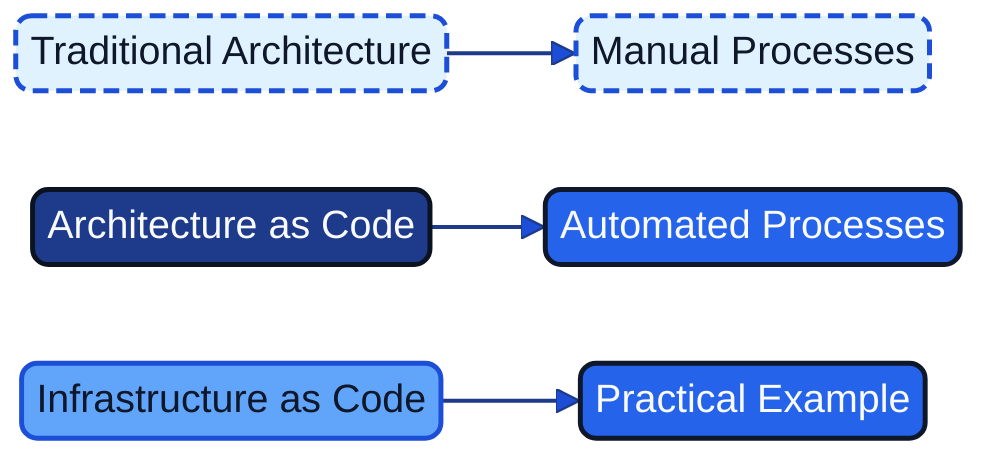
Architecture as Code represents a paradigm shift in system development where the entire system architecture is defined, version-controlled, and managed through code. This approach enables organisations to apply the same methodologies as traditional software development across their whole technical landscape.
The diagram illustrates the evolution from manual processes to the comprehensive vision of Architecture as Code, where every aspect of the system architecture is codified.
Traditional methods for system architecture have often been manual and document-based. Architecture as Code builds on established principles from software development and applies them to the complete system landscape.
Primary topics explored
- Evolution towards Architecture as Code
- Microservice complexity as the primary driver
- Definition and Scope
- Critique of Traditional Architecture
- The Interconnected Flow of Architecture as Code
- Purpose and Target Audience of the Book
About Architecture as Code
Infrastructure as Code represents a fundamental change in how we manage and develop IT infrastructure. This book provides organisations with practical guidance for implementing IaC principles whilst fulfilling local compliance requirements and optimising costs.
The book covers everything from fundamental principles and tools to advanced implementation strategies, security aspects, and organisational changes required for successful IaC adoption.
IT architects, DevOps teams, developers, and decision-makers within organisations.

Gunnar Nordqvist
Conceived, directed and published the books of The Transformed Architecture.
Continue with the full chapter
Chapter 1: Introduction to Architecture as Code in Architecture as Code gives the detailed explanations, practical examples and implementation patterns behind this summary.
This whitepaper belongs to “Foundations” and is one of 38 drawn from the manuscript.