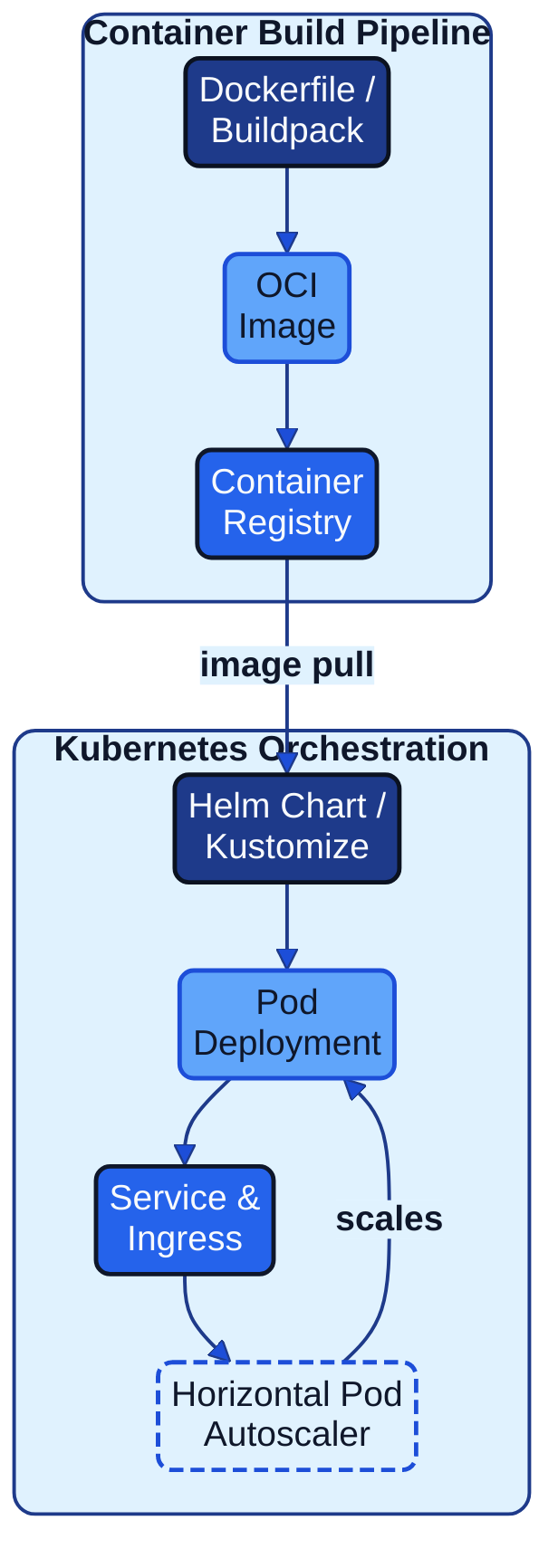
Architecture as Code underpins modern container platforms by turning deployment practices into repeatable definitions. When infrastructure and runtime configuration are described in version-controlled files, teams gain portable, scalable, and reproducible delivery pipelines that function reliably across data centres and cloud providers.
As Chapter 1 showed, microservices and event-driven architecture are now mainstream among backend developers (Source [7]). The same SlashData research for the Cloud Native Computing Foundation notes that use of internal developer platforms rose from 23% in Q3 2024 to 27% in Q3 2025 as teams try to tame the resulting estate. Together these figures highlight why Architecture as Code is essential. When so many teams orchestrate dozens of loosely coupled services and event flows, formal boundary definitions, shared contracts, and automated governance become mandatory to avoid integration drift. Codifying those boundaries as part of an Architecture as Code programme provides the repeatability and audit trail that scaling cloud-native delivery demands.
Containers package an application together with its libraries and runtime dependencies inside isolated units. Within an Architecture as Code approach, those units are described declaratively so that the same package can be built, tested, and promoted through each stage without configuration drift. The result is predictable application behaviour and simpler collaboration between development, operations, and security teams.
Primary topics explored
- Industry trend data driving Architecture as Code adoption
- The role of container technology within Architecture as Code
- Kubernetes as an orchestration platform
- Service mesh and advanced networking
- Infrastructure automation with container platforms
- Guard rails that keep manifests trustworthy
About Architecture as Code
Infrastructure as Code represents a fundamental change in how we manage and develop IT infrastructure. This book provides organisations with practical guidance for implementing IaC principles whilst fulfilling local compliance requirements and optimising costs.
The book covers everything from fundamental principles and tools to advanced implementation strategies, security aspects, and organisational changes required for successful IaC adoption.
IT architects, DevOps teams, developers, and decision-makers within organisations.

Gunnar Nordqvist
Conceived, directed and published the books of The Transformed Architecture.
Continue with the full chapter
Chapter 7: Containerisation and Orchestration as Code in Architecture as Code gives the detailed explanations, practical examples and implementation patterns behind this summary.
This whitepaper belongs to “Architecture Platform” and is one of 38 drawn from the manuscript.