By the end of this chapter, you will be able to:
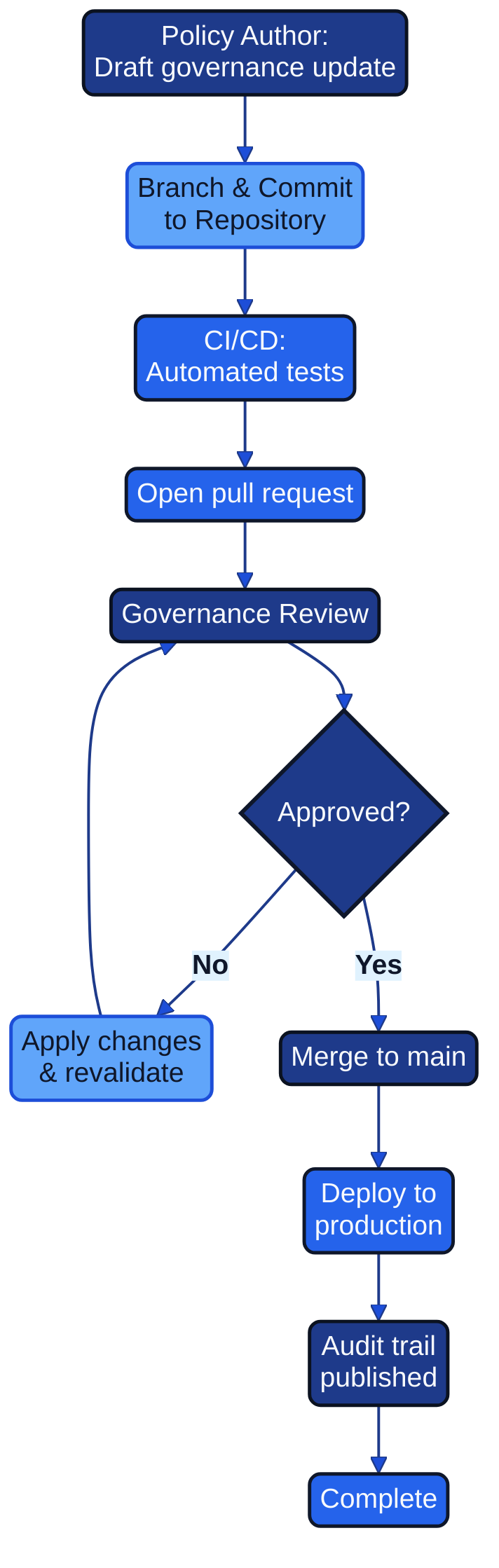
Figure 11.1 illustrates how policy authors, reviewers, automation, production controls, and the audit portal coordinate through a single repository to evolve governance. Governance as Code extends the principles of Infrastructure as Code to the policies, approval flows, and organisational guardrails that keep architecture and delivery aligned with strategic intent. By expressing governance artefacts in version-controlled repositories, teams gain transparency, traceability, and automation opportunities while still respecting compliance and risk requirements. The shared workflow also keeps an audit trail that shows exactly which checks ran, who approved each change, and when compliance evidence was published.
Architecture as Code relies on a single, authoritative set of controls that can be mapped repeatedly to different external duties. This assure once, comply many principle states that governance guardrails are expressed, tested, and evidenced once, then re-used across frameworks such as ISO 27001, SOC 2, NIST 800-53, GDPR, and internal control catalogues. By codifying approval policies, data residency rules, and risk mitigations in the same repository, organisations avoid duplicating assessments for every regulator. Instead, they capture a dependable stream of artefacts that downstream teams can reference in Policy and Security as Code in Detail, Security Fundamentals for Architecture as Code, and Compliance and Regulatory Adherence. The result is consistent decision-making, reduced audit fatigue, and a shared language for evaluating governance debt.
Primary topics explored
- Learning Objectives
- Overview
- Implementing Approval Processes with Pull Requests
- Navigating Competency Gaps During Transition
- Tooling to Enable Non-Developers
- Policy as Code: OPA and Rego in Practice
About Architecture as Code
Infrastructure as Code represents a fundamental change in how we manage and develop IT infrastructure. This book provides organisations with practical guidance for implementing IaC principles whilst fulfilling local compliance requirements and optimising costs.
The book covers everything from fundamental principles and tools to advanced implementation strategies, security aspects, and organisational changes required for successful IaC adoption.
IT architects, DevOps teams, developers, and decision-makers within organisations.

Gunnar Nordqvist
Conceived, directed and published the books of The Transformed Architecture.
Continue with the full chapter
Chapter 11: Governance as Code in Architecture as Code gives the detailed explanations, practical examples and implementation patterns behind this summary.
This whitepaper belongs to “Security and Governance” and is one of 38 drawn from the manuscript.