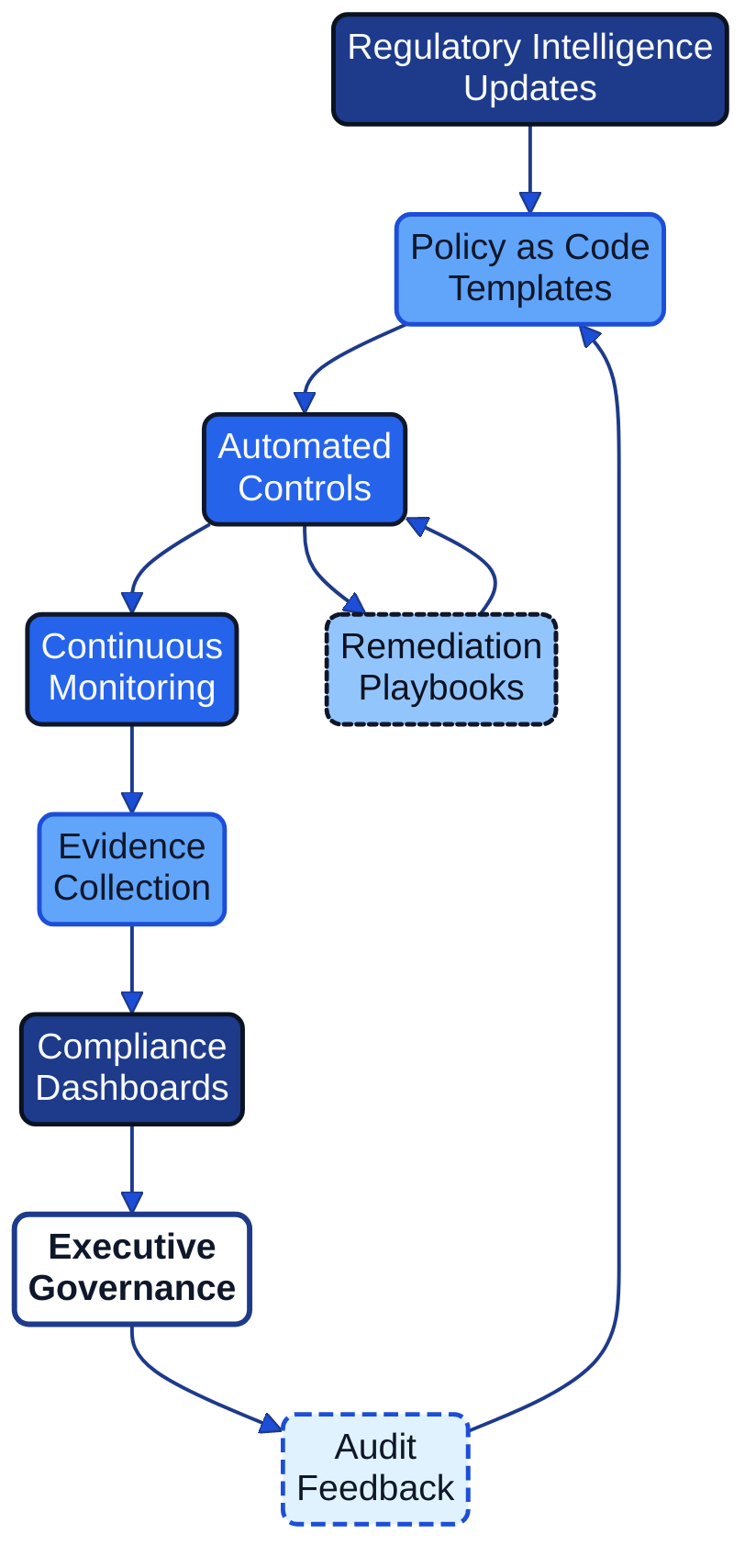
Architecture as Code is central to meeting the expanding scope of compliance requirements and regulatory expectations. As introduced in Chapter 10 on policy and security, codified policies allow teams to translate legislation into repeatable controls. Figure 12.1 shows how that translation depends on a closed feedback loop. This chapter focuses on the organisational and process-oriented aspects that keep this loop healthy in large-scale environments.
Artificial intelligence extends the compliance loop by ingesting telemetry, policy breaches, and regulator feedback to flag emerging risks before they become audit issues. Rather than repeating the continuous monitoring workflows described earlier in this chapter, the AI layer focuses on triage: classifying incidents, enriching them with contextual evidence, and recommending automation or escalation paths. Figure 12.2 highlights this control flow. Telemetry and policy violations feed an AI compliance engine that scores risk, orchestrates remediation through Infrastructure as Code updates, and curates evidence packs for review. Human oversight remains central, validating the automated decisions and refining model prompts so that the organisation stays aligned with regulatory expectations.
Compliance programmes rely on demonstrable traceability between regulatory statements and the technical controls that satisfy them. Figure 12.3 documents that traceability: business, compliance, performance, and cost requirements flow into specific functional controls such as encryption, network segmentation, audit logging, and automated scaling. Those controls are implemented through Terraform configuration and validated by targeted test suites, compliance scanners, and cost analysis. Maintaining this map ensures that every requirement is implemented, tested, and evidenced before auditors ask for proof.
Primary topics explored
- AI and Machine Learning for Compliance Automation
- Requirements Traceability and Validation
- Cloud-native and Serverless Compliance Controls
- Policy-driven Infrastructure and Governance
- Future-facing Considerations (Speculative)
- Practical Examples
About Architecture as Code
Infrastructure as Code represents a fundamental change in how we manage and develop IT infrastructure. This book provides organisations with practical guidance for implementing IaC principles whilst fulfilling local compliance requirements and optimising costs.
The book covers everything from fundamental principles and tools to advanced implementation strategies, security aspects, and organisational changes required for successful IaC adoption.
IT architects, DevOps teams, developers, and decision-makers within organisations.

Gunnar Nordqvist
Conceived, directed and published the books of The Transformed Architecture.
Continue with the full chapter
Chapter 12: Compliance and Regulatory Adherence in Architecture as Code gives the detailed explanations, practical examples and implementation patterns behind this summary.
This whitepaper belongs to “Security and Governance” and is one of 38 drawn from the manuscript.