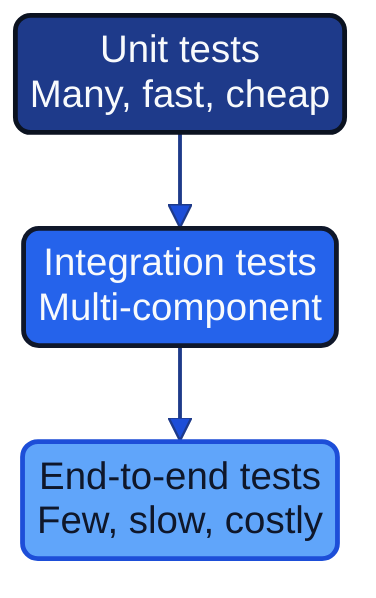
A comprehensive testing strategy for Architecture as Code requires multiple testing levels, from unit tests to end-to-end validation. The test pyramid illustrates the structured progression from rapid developer tests to comprehensive integration validation, with each layer serving distinct quality assurance purposes.
Testing codified infrastructure differs fundamentally from traditional software testing by focusing on architectural configuration, resource compatibility and environmental consistency rather than business logic. Effective Architecture as Code testing ensures configurations produce expected results consistently across different environments whilst maintaining security, compliance and cost efficiency.
Modern codified infrastructure testing encompasses multiple dimensions: syntactic validation of code, policy compliance checking, cost forecasting, security vulnerability analysis and functional testing of deployed infrastructure. This multilayered approach identifies problems early in the development cycle when they are cheaper and simpler to fix, preventing costly production incidents.
Primary topics explored
- Overview
- Unit Testing for Codified Infrastructure
- Test Management with Vitest for Architecture as Code
- Integration Testing and Environment Validation
- Security and Compliance Testing
- Performance and Scalability Testing
About Architecture as Code
Infrastructure as Code represents a fundamental change in how we manage and develop IT infrastructure. This book provides organisations with practical guidance for implementing IaC principles whilst fulfilling local compliance requirements and optimising costs.
The book covers everything from fundamental principles and tools to advanced implementation strategies, security aspects, and organisational changes required for successful IaC adoption.
IT architects, DevOps teams, developers, and decision-makers within organisations.

Gunnar Nordqvist
Conceived, directed and published the books of The Transformed Architecture.
Continue with the full chapter
Chapter 13: Testing Strategies for Infrastructure as Code in Architecture as Code gives the detailed explanations, practical examples and implementation patterns behind this summary.
This whitepaper belongs to “Delivery and Operations” and is one of 38 drawn from the manuscript.