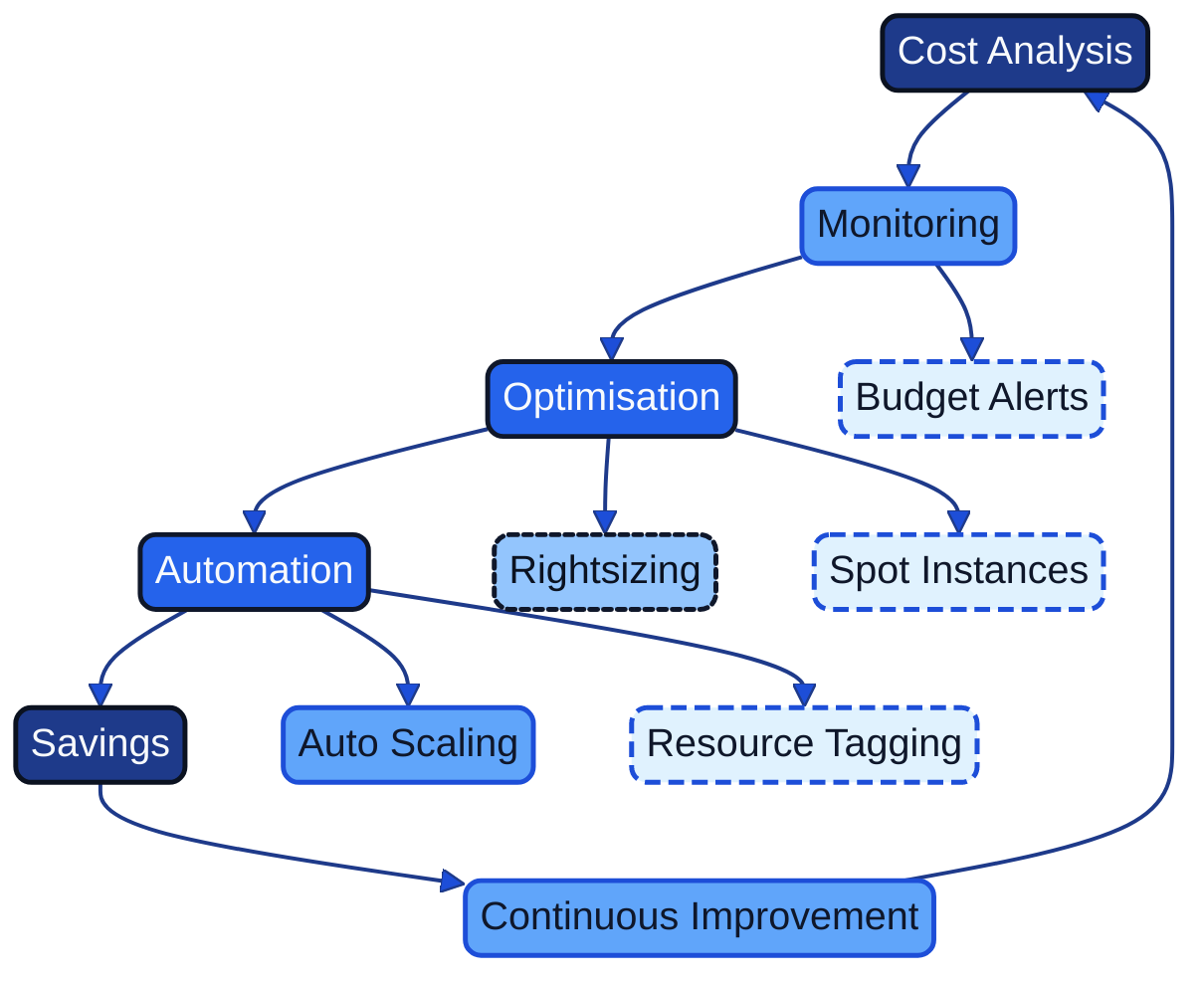
Cost optimisation forms a critical component in Architecture as Code implementations, particularly when organisations migrate to cloud-based solutions. Without proper cost management, cloud costs can rapidly escalate and undermine the economic benefits of Architecture as Code.
Modern cloud providers offer pay-as-you-use models which can be both advantageous and risky. Architecture as Code enables precise control over resource allocation and automated cost optimisation through policy-driven resource management and intelligent scaling.
EU organisations face unique challenges when applying cloud costs, including currency fluctuations between EUR and USD pricing, regulatory requirements affecting data storage under GDPR, and the need to balance cost efficiency with performance and security across multiple member states. Architecture as Code-based solutions offer tools to address these challenges systematically.
Primary topics explored
- Overall Description
- FinOps and Cost Governance
- Automatic Resource Scaling and Rightsizing
- Cost Monitoring and Alerting
- Multi-Cloud Cost Optimisation
- Practical Examples
About Architecture as Code
Infrastructure as Code represents a fundamental change in how we manage and develop IT infrastructure. This book provides organisations with practical guidance for implementing IaC principles whilst fulfilling local compliance requirements and optimising costs.
The book covers everything from fundamental principles and tools to advanced implementation strategies, security aspects, and organisational changes required for successful IaC adoption.
IT architects, DevOps teams, developers, and decision-makers within organisations.

Gunnar Nordqvist
Conceived, directed and published the books of The Transformed Architecture.
Continue with the full chapter
Chapter 15B: Cost Optimisation and Resource Management in Architecture as Code gives the detailed explanations, practical examples and implementation patterns behind this summary.
This whitepaper belongs to “Delivery and Operations” and is one of 38 drawn from the manuscript.