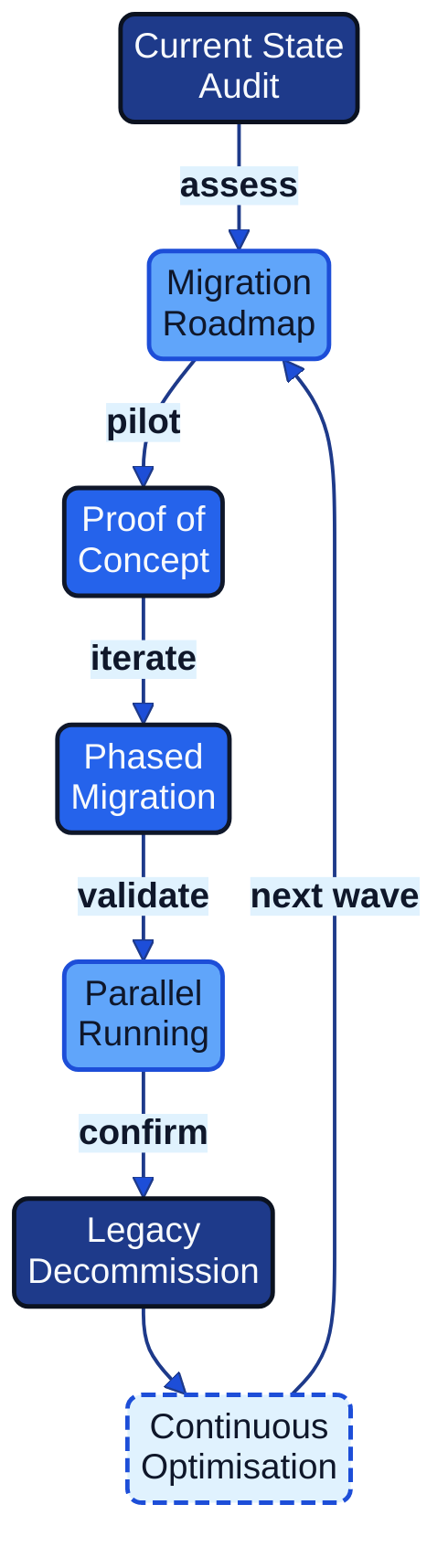
Migration from traditional, manually configured infrastructure to Architecture as Code represents one of the most critical transformations for modern IT organisations. This process requires not only technical restructuring but also organisational change and cultural adaptation to code-based ways of working.
European organisations face unique migration challenges through legacy systems that have developed over decades, regulatory requirements that constrain the pace of change, and the need to balance innovation with operational stability. Successful migration requires comprehensive planning that minimises risks whilst enabling rapid value realisation.
Modern migration strategies must accommodate hybrid scenarios where legacy infrastructure coexists with Architecture as Code-managed resources during extended transition periods. This hybrid approach enables gradual migration that reduces business risk whilst enabling immediate benefits from Architecture as Code adoption.
Primary topics explored
- Overall Description
- Assessment and planning phases
- Lift-and-shift vs re-architecting
- Gradual codification of infrastructure
- Team transition and competence development
- Practical Examples
About Architecture as Code
Infrastructure as Code represents a fundamental change in how we manage and develop IT infrastructure. This book provides organisations with practical guidance for implementing IaC principles whilst fulfilling local compliance requirements and optimising costs.
The book covers everything from fundamental principles and tools to advanced implementation strategies, security aspects, and organisational changes required for successful IaC adoption.
IT architects, DevOps teams, developers, and decision-makers within organisations.

Gunnar Nordqvist
Conceived, directed and published the books of The Transformed Architecture.
Continue with the full chapter
Chapter 16: Migration from Traditional Infrastructure in Architecture as Code gives the detailed explanations, practical examples and implementation patterns behind this summary.
This whitepaper belongs to “Delivery and Operations” and is one of 38 drawn from the manuscript.