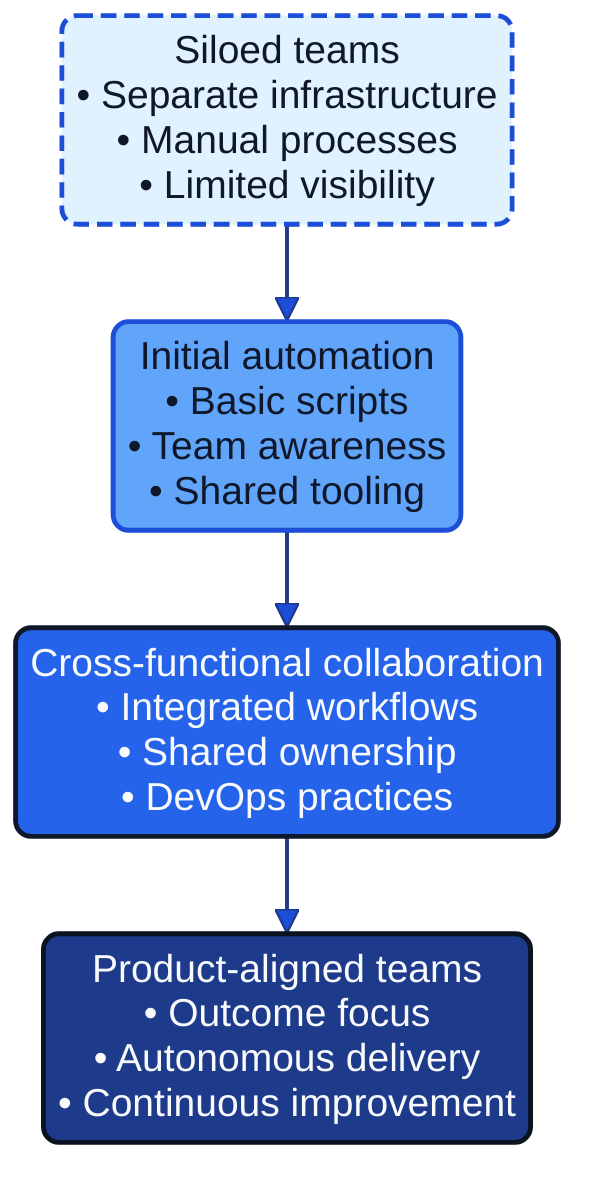
Architecture as Code changes far more than tooling. It demands new habits, shared language, and organisational structures that keep pace with automated delivery. Sustainable transformation happens when leadership connects strategy, culture, and day-to-day practices so teams can deliver infrastructure with the same confidence and cadence as software.
Organisations rarely adopt Architecture as Code principles overnight. Instead, they move through progressive stages, each building on earlier capabilities whilst introducing new collaboration patterns and decision-making structures. Understanding this evolution helps leadership anticipate challenges, allocate resources, and maintain momentum through periods of rapid change.
By the end of this chapter, you will be able to:
Primary topics explored
- Learning Objectives
- Building a DevOps Culture
- Designing Cross-functional Teams
- Developing Capability and Confidence
- Evolving Roles and Career Paths
- Change Management in Practice
About Architecture as Code
Infrastructure as Code represents a fundamental change in how we manage and develop IT infrastructure. This book provides organisations with practical guidance for implementing IaC principles whilst fulfilling local compliance requirements and optimising costs.
The book covers everything from fundamental principles and tools to advanced implementation strategies, security aspects, and organisational changes required for successful IaC adoption.
IT architects, DevOps teams, developers, and decision-makers within organisations.

Gunnar Nordqvist
Conceived, directed and published the books of The Transformed Architecture.
Continue with the full chapter
Chapter 17: Organisational Change and Team Structures in Architecture as Code gives the detailed explanations, practical examples and implementation patterns behind this summary.
This whitepaper belongs to “Organisation and Leadership” and is one of 38 drawn from the manuscript.