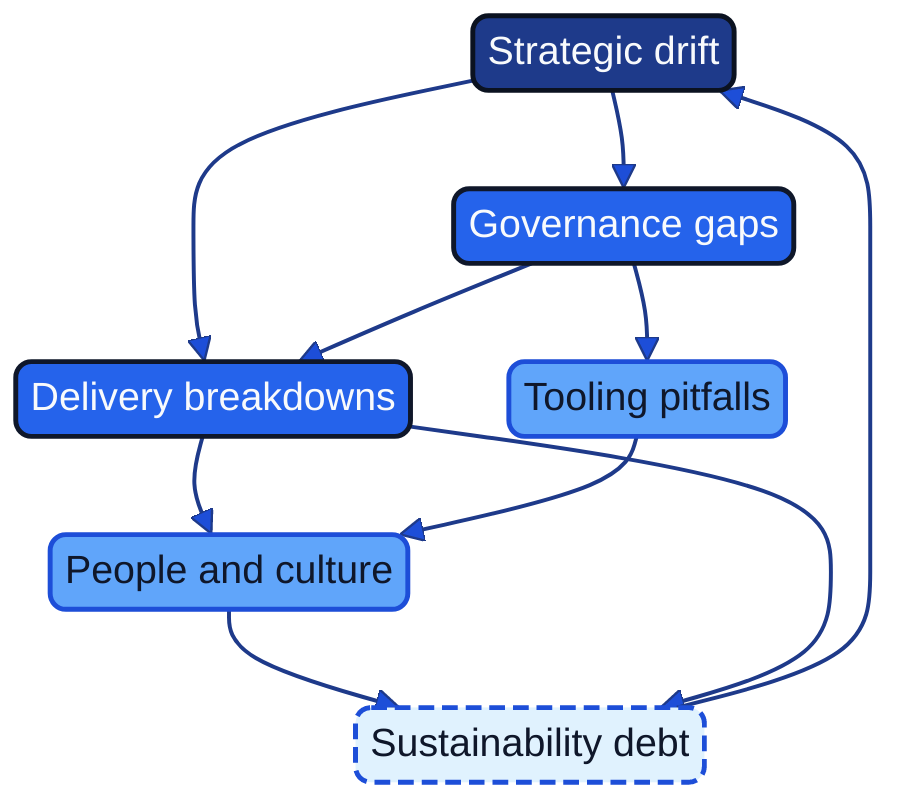
Architecture as Code (AaC) brings architectural thinking into the same disciplined delivery processes that teams already apply to software and infrastructure. Yet programmes stumble when they copy technical mechanisms without reshaping culture, governance, and operational rhythms. This chapter examines recurring anti-patterns that undermine AaC initiatives across diverse industries. Understanding these pitfalls helps organisations design early safeguards, establish healthier feedback loops, and sustain momentum beyond the initial transformation campaign.
Before exploring anti-patterns, ensure your organisation has assessed its readiness using the framework in Chapter 26A: Prerequisites for Architecture as Code Adoption.
Executives sometimes assume that acquiring a single modelling or provisioning platform unlocks Architecture as Code. The anti-pattern manifests when budgets focus on licences and consultants whilst neglecting change management, governance design, and internal capability building. Teams inherit sophisticated tooling without a shared architectural vocabulary or decision-making forum. Models remain stale, infrastructure definitions diverge from reality, and senior leaders declare the experiment a failure.
Primary topics explored
- Strategic Anti-Patterns
- Governance and Compliance Anti-Patterns
- Delivery Lifecycle Anti-Patterns
- Tooling Anti-Patterns
- Cultural and People Anti-Patterns
- Scaling and Sustainability Anti-Patterns
About Architecture as Code
Infrastructure as Code represents a fundamental change in how we manage and develop IT infrastructure. This book provides organisations with practical guidance for implementing IaC principles whilst fulfilling local compliance requirements and optimising costs.
The book covers everything from fundamental principles and tools to advanced implementation strategies, security aspects, and organisational changes required for successful IaC adoption.
IT architects, DevOps teams, developers, and decision-makers within organisations.

Gunnar Nordqvist
Conceived, directed and published the books of The Transformed Architecture.
Continue with the full chapter
Chapter 26B: Anti-Patterns in Architecture as Code Programmes in Architecture as Code gives the detailed explanations, practical examples and implementation patterns behind this summary.
This whitepaper belongs to “Future and Wrap-up” and is one of 38 drawn from the manuscript.