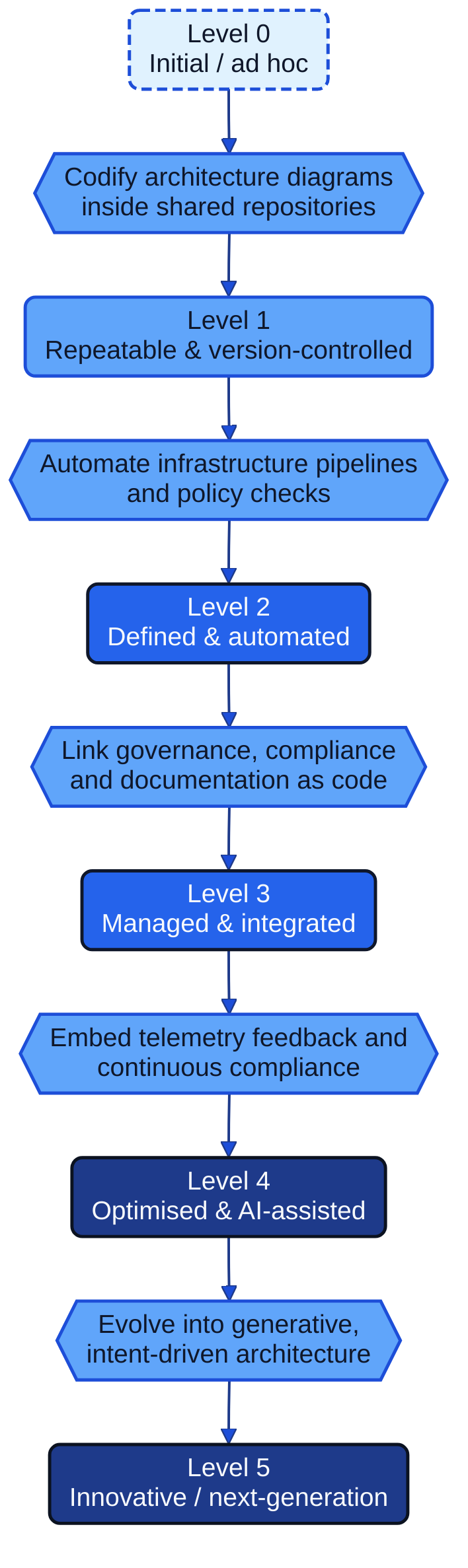
Modern organisations are increasingly turning to architecture as code (AaC) to keep systems design, security and governance aligned with rapid delivery.
The Architecture as Code book describes how codified representations of architecture, policy, governance and even cultural knowledge share common traits:
they use machine-readable formats, live in version control and are automatically validated.
Primary topics explored
- Maturity model for implementing architecture as code
- Interactive radar assessment
- Staircase overview of maturity progression
- Dimensions and “as code” aspects
- Assessment checklist for radar visualisation
- Maturity levels
About Architecture as Code
Infrastructure as Code represents a fundamental change in how we manage and develop IT infrastructure. This book provides organisations with practical guidance for implementing IaC principles whilst fulfilling local compliance requirements and optimising costs.
The book covers everything from fundamental principles and tools to advanced implementation strategies, security aspects, and organisational changes required for successful IaC adoption.
IT architects, DevOps teams, developers, and decision-makers within organisations.

Gunnar Nordqvist
Conceived, directed and published the books of The Transformed Architecture.
Continue with the full chapter
Appendix D: Architecture as Code Maturity Model in Architecture as Code gives the detailed explanations, practical examples and implementation patterns behind this summary.
This whitepaper belongs to “Reference” and is one of 38 drawn from the manuscript.