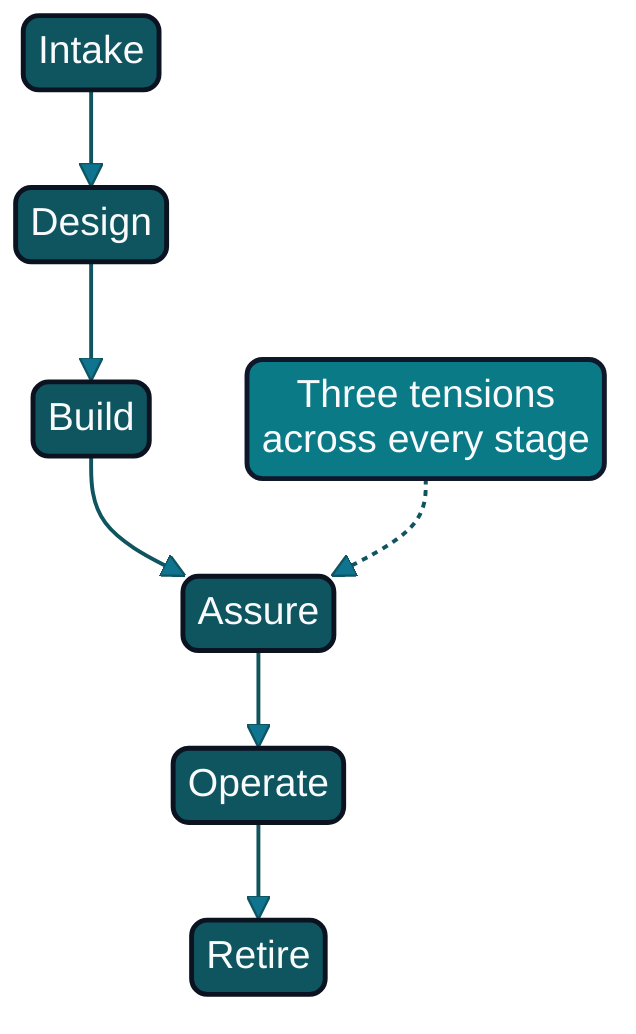
Chapter 20 catalogued how AI programmes fail; this chapter distils the book into the practices that prevent those failures. The pieces built in Chapters 1 to 20 are reassembled in the order in which a programme meets them, from intake to retirement, and then viewed through the three tensions named in Chapter 1: speed versus control, autonomy versus accountability, and innovation versus sovereignty. The chapter closes with a practice checklist that belongs in version control and the twelve lessons I would hand to a chief architect starting an AI programme tomorrow.
The three tensions are speed versus control (make control fast), autonomy versus accountability (bound autonomy in code) and innovation versus sovereignty (keep options open). They are resolved through the practice checklist, the evidence manifest and the portfolio register respectively.
A best practice is a remedy that has been generalised. Each practice points to the chapter where it is codified, so the chapter repeats little; it organises. Where a practice is primarily engineering, the chapter states the governance requirement, which is what a forum or a gate checks, and leaves the method to the platform teams.
Primary topics explored
- From catalogue to practice
- Practices by lifecycle stage
- Practices for the three tensions
- Keeping governance and platform decisions consistent
- The practice checklist as code
- Twelve lessons learned
About AI Governance
AI Governance is Book 2 of The Transformed Architecture. It shows how large European enterprises and public authorities decide what artificial intelligence is used for, classify and manage its risks, meet the obligations of the EU AI Act and its neighbours, choose and contract their suppliers, organise the forums that take decisions, and produce the evidence that shows it is all true.
It builds on the conclusions of Architecture as Code.
Chief risk and compliance officers, AI governance boards, CIOs and chief architects, and senior officials in public authorities.

Gunnar Nordqvist
Conceived, directed and published the books of The Transformed Architecture.
Continue with the full chapter
Chapter 21: Best Practices and Lessons Learned in AI Governance gives the detailed explanations, practical examples and implementation patterns behind this summary.
This whitepaper belongs to “Experience” and is one of 32 drawn from the manuscript.