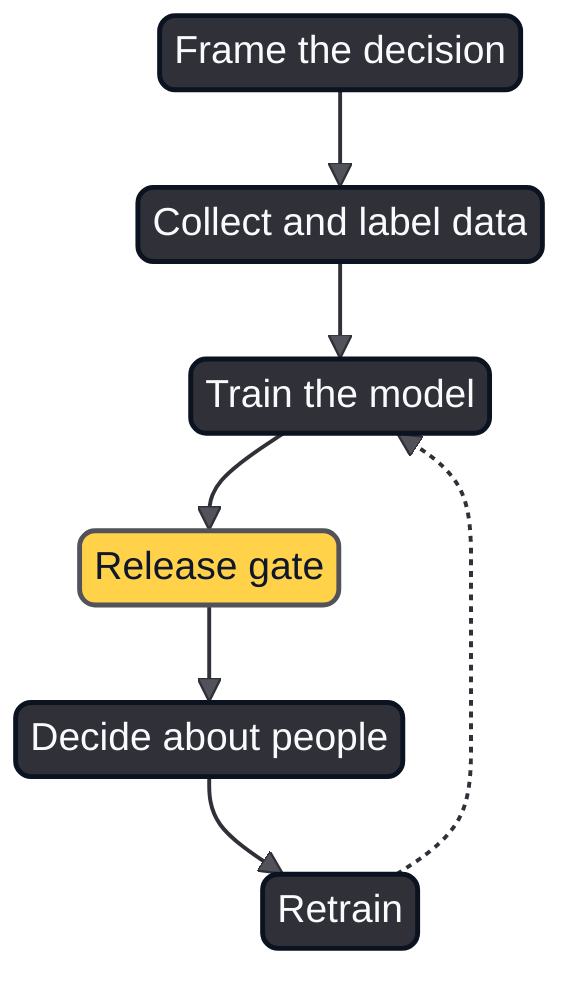
Chapter 11 showed that the watching and judging state of science fiction has already appeared in European public administration without any advanced AI. This chapter follows one strand of those failures beyond the public sector: discrimination. When a system that ranks, scores or classifies people works systematically worse for some groups, the harm is no longer one unfair decision but the same unfair decision repeated for every person who passes through the system, with an appearance of neutrality that a human decision-maker rarely enjoys.
The chapter tests T7 The watching state against that evidence. The subject matters most to public authorities and insurers, whose AI systems the AI Act classifies as high-risk (1, European Union, 2024). AI Governance concluded that in public authorities legality comes before capability, and that trouble starts where statistical models replace rules without explanation discipline (178, Nordqvist, 2026); discrimination is where that trouble is most often found.
Table 12.1: Where bias enters and the check that can detect it.
Primary topics explored
- Bias in, bias out, at scale
- Documented cases
- Fairness metrics and their trade-offs
- The legal frame
- Detecting and reducing bias
- The debate
About AI Threat
AI Threat is Book 5 of The Transformed Architecture. It investigates whether the dystopias of science fiction, with AI as the threat, are coming true. It covers every scale of the threat, from the human mind and society to misuse, machines beyond control and the end of the world, stages every debate constructively, and turns the verdict into what individuals, European enterprises and public authorities can do.
It builds on the conclusions of Architecture as Code, AI Governance, AI Platform and Security and AI Red Team.
Boards, chief risk officers, CISOs, AI governance leads, architects and public-sector leaders.

Gunnar Nordqvist
Conceived, directed and published the books of The Transformed Architecture.
Continue with the full chapter
Chapter 12: Discrimination at Scale: Bias in Automated Judgement in AI Threat gives the detailed explanations, practical examples and implementation patterns behind this summary.
This whitepaper belongs to “Society and Truth” and is one of 39 drawn from the manuscript.