The machine dystopias of the public imagination end in a moment: the machine decides, the doors lock, the missiles launch. This chapter examines a path to the same destination that needs no moment at all: people hand decisions, attention and judgement to systems one reasonable step at a time, until the economy, the state and the organisation run on systems that optimise for something other than what people want, and nobody inside them could take the work back. Along the same path, many organisations come to depend on the same few systems, so that a single fault, executed at machine speed, fails all of them at once.
The chapter tests three tropes from Chapter 2. T8 The machine that stops, and the humans who forgot is central: Chapters 6, 14 and 15 tested it for the mind, work and the market, and this chapter tests it for whole systems. T2 The literal genie appears as many systems that each pursue a measurable proxy faithfully and faster than anyone can intervene, and T9 The pleasure machine as the comfort that makes each delegation welcome. This form of the dystopia most resembles how organisations actually adopt technology: no board decides to become dependent on systems it cannot replace; it decides, quarter by quarter, to automate a task that works. The chapter builds on three conclusions of the series: agents are governed as well-meaning insiders whose consequences are capped by boundaries (F13), oversight is designed rather than declared (F16), and speculative outlooks are answered with reversibility (F31) (178, Nordqvist, 2026).
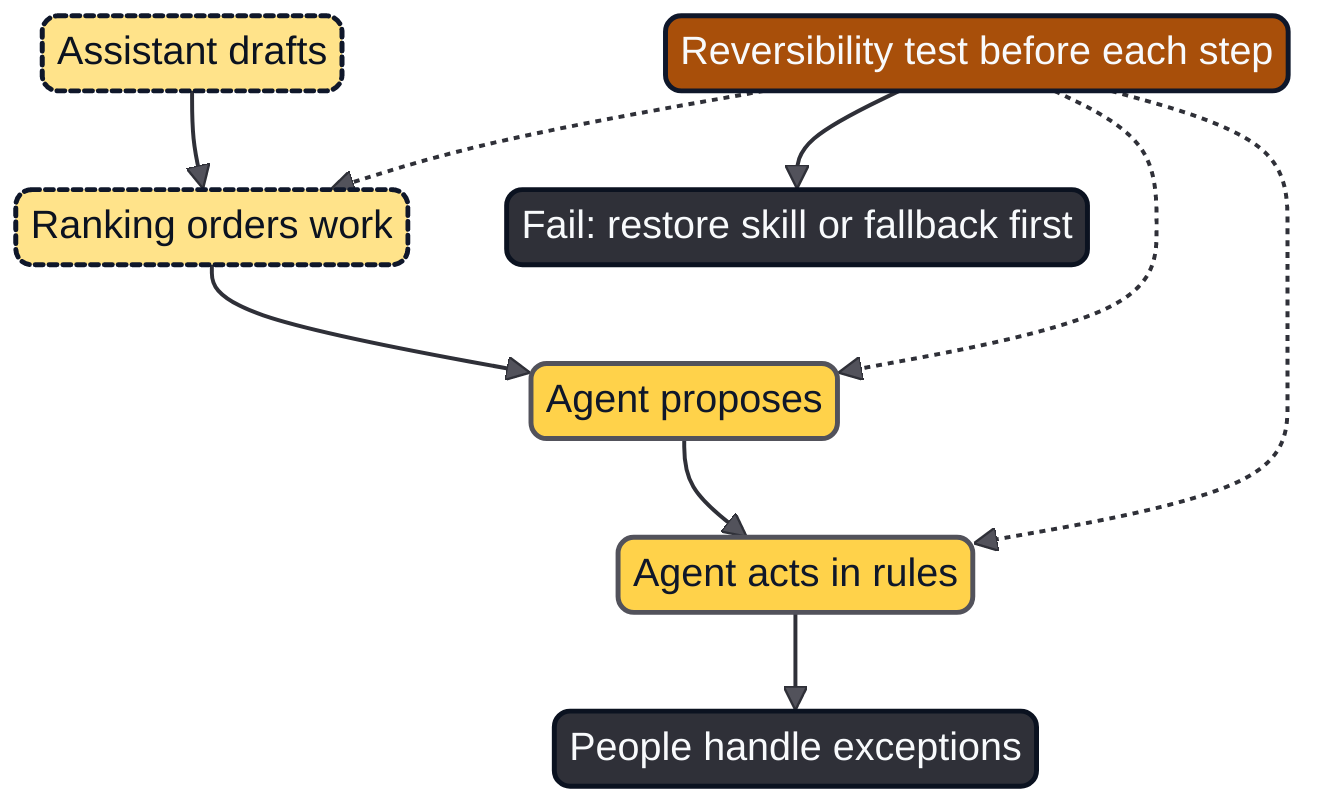
Table 26.1: The reversibility checkpoints.
Primary topics explored
- The Machine Stops, revisited
- Gradual disempowerment
- Correlated failure at machine speed
- Accumulative risk in one organisation
- Governing delegation
- The debate
About AI Threat
AI Threat is Book 5 of The Transformed Architecture. It investigates whether the dystopias of science fiction, with AI as the threat, are coming true. It covers every scale of the threat, from the human mind and society to misuse, machines beyond control and the end of the world, stages every debate constructively, and turns the verdict into what individuals, European enterprises and public authorities can do.
It builds on the conclusions of Architecture as Code, AI Governance, AI Platform and Security and AI Red Team.
Boards, chief risk officers, CISOs, AI governance leads, architects and public-sector leaders.

Gunnar Nordqvist
Conceived, directed and published the books of The Transformed Architecture.
Continue with the full chapter
Chapter 26: Gradual Disempowerment and Correlated Failure in AI Threat gives the detailed explanations, practical examples and implementation patterns behind this summary.
This whitepaper belongs to “Machines Beyond Control” and is one of 39 drawn from the manuscript.