Three sentences from one week, none of them quoted from a real document. A tender asks for "an AI system" for case handling. A council debates whether to automate the handling of benefit applications. A strategy says the organisation will move "to the cloud". Each sentence carries a picture: one box with two letters on it, two camps with a person on one side and a machine on the other, one cloud. Behind them sits a fourth, the picture the people who build systems draw, boxes joined by arrows.
Before the book can offer a better picture, it has to show these four, what each was good for and what each hides: the architecture diagram, "the AI system", humans versus machines, and the cloud. Each served well in an earlier landscape and still serves somewhere. Against the data on the present landscape, each hides most of what matters. The data, as Eurostat's enterprise surveys show, lie on scales and not in boxes, and that is why a better picture is possible.
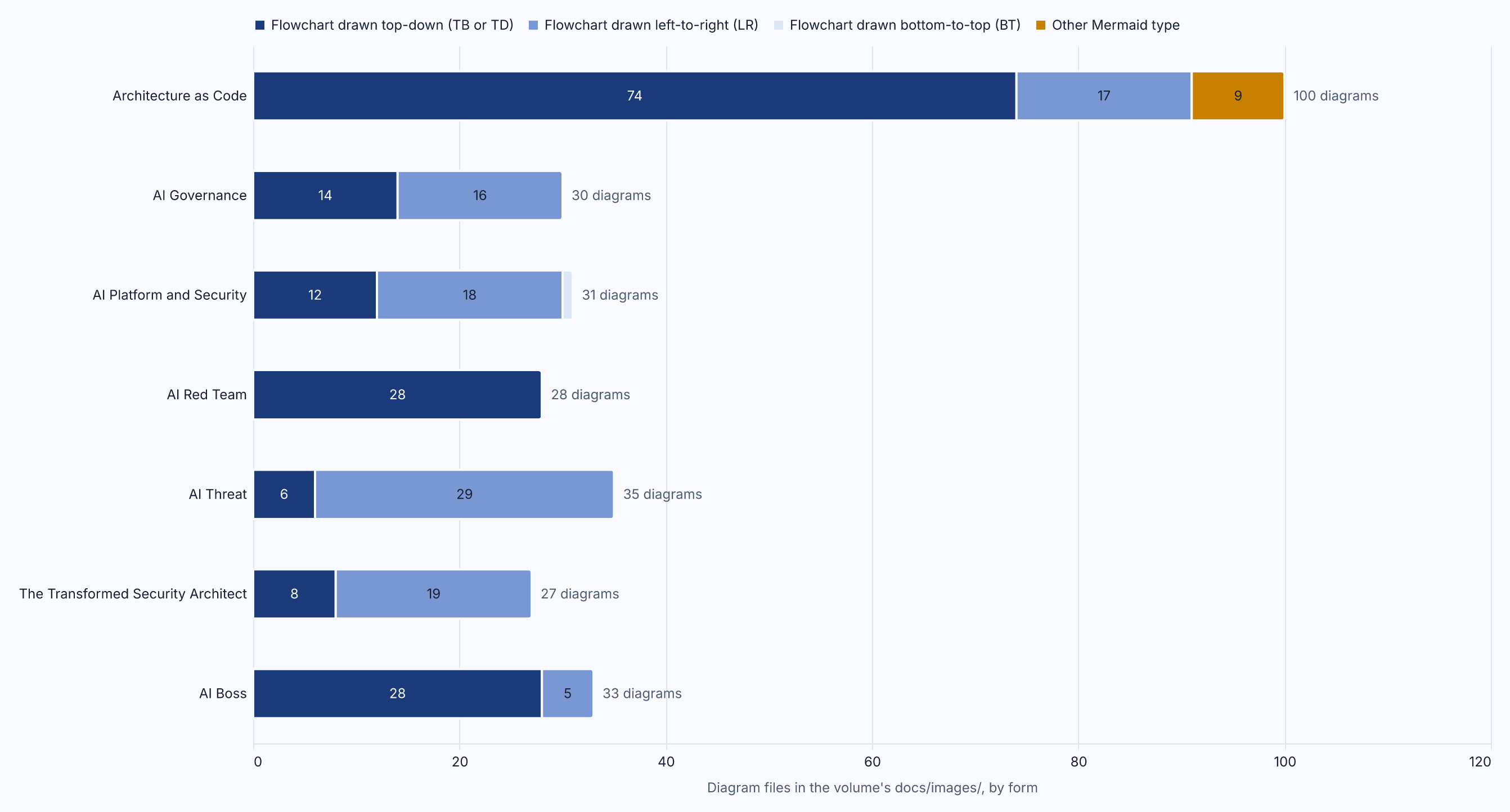
The architecture diagram is the oldest of the four pictures: rectangles for systems or their parts, arrows for the data or the calls between them, a larger rectangle for a boundary. In its disciplined form it shows a system in its setting, then its main parts, then the parts of one of them, all generated from a single model, as Architecture as Code (Chapter 6) describes (1, Nordqvist, 2025). It is a fine instrument for the question it was made for, which is how a system is built.
Primary topics explored
- Boxes and arrows
- Even the careful draw it differently
- The AI system
- Humans versus machines
- The cloud
- Testing a picture: five questions
About Landscape
Landscape is a companion to The Transformed Architecture. It examines what happens when artificial intelligence takes the manager's chair: algorithmic management of direction, evaluation, consequence, development and care, the effects on people, the management of AI agents, Europe's legal answer, and how to design an accountable AI boss, for European enterprises and public authorities.
It builds on the conclusions of Architecture as Code, AI Governance, AI Platform and Security, AI Red Team, AI Threat and The Transformed Security Architect.
Executives, line managers, HR and people leaders, works councils and trade unions, public employers, architects and AI governance leads, data protection and legal officers, procurement and programme leaders, and risk, compliance and audit.

Gunnar Nordqvist
Conceived, directed and published the books of The Transformed Architecture.
Continue with the full chapter
Chapter 2: The Old Pictures: Boxes, Binaries and the Cloud in Landscape gives the detailed explanations, practical examples and implementation patterns behind this summary.
This whitepaper belongs to “The Test and the Picture” and is one of 26 drawn from the manuscript.